
Intersection Safety in Alberta’s Capital Region: Risks & Prevention
Intersections are where traffic flow, human behaviour, and split-second decisions collide. In Alberta’s Capital Region, they account for a significant share of serious road incidents, especially during winter and low-light months.
| 1 in 4 Collisions at Intersections | ~80% Involve Driver Error | 42 Annual Fatalities (Avg) | 800+ Serious Injuries/Year |
*This content is built on recent public data, research findings, and on-the-ground reporting. It is meant for drivers, pedestrians, and cyclists who want to understand why intersections remain so risky and what reduces that risk in everyday conditions we all face. The analysis and presentation reflect an independent editorial approach and do not represent or rely on any former organizations, programs, or affiliations associated with this domain.
Intersection Safety in Numbers
Across Alberta, the numbers paint a consistent picture:
- Roughly one in four collisions happens at an intersection
- About 80 percent of collisions involve some form of driver error
- Most crashes occur in urban areas, yet a large share of fatal intersection collisions happen outside city cores
- Winter conditions and reduced daylight sharply increase risk
KEY FINDING: Urban vs Rural Paradox
While 96.3% of intersection collisions occur in urban areas, nearly 44.1% of fatal intersection crashes happen in rural areas due to higher speeds and less infrastructure.
Source: Alberta Transportation, 2020-2025
These are not abstract statistics. We see them reflected every year in local reports, police updates, and municipal safety data.
Why Intersections Are High-Risk by Design
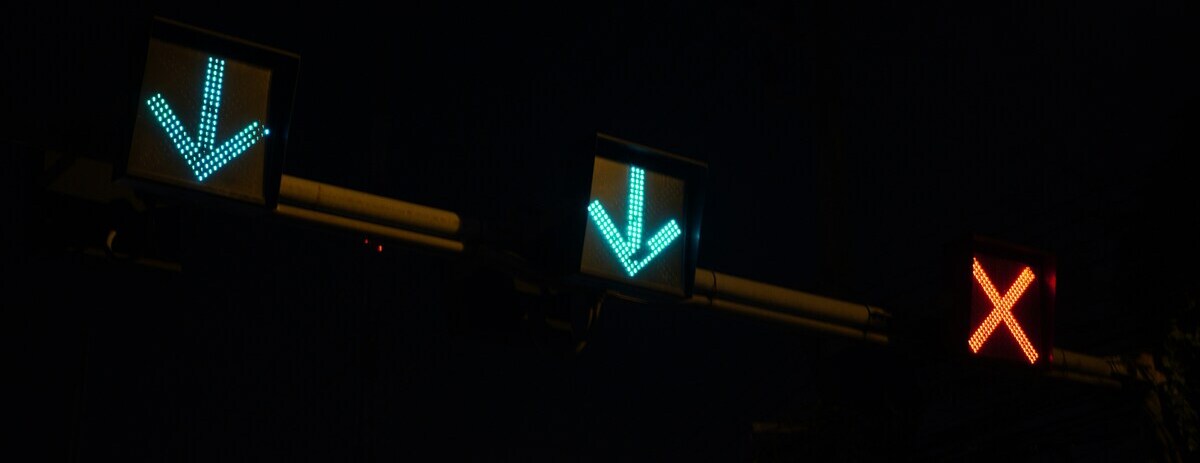
An intersection forces multiple road users to cross paths at the same time. Vehicles move at different speeds. Pedestrians and cyclists enter with far less protection. Signals change. Sightlines are often imperfect. All of this happens within seconds.
“A simple left turn illustrates the challenge. One driver judges the speed of oncoming traffic. Another expects that driver to wait. A pedestrian steps off the curb when the signal changes. None of these actions are reckless on their own. Together, they create a narrow margin for error.”
This is why intersection safety is not about blaming individuals. It is about understanding how design, timing, and human limits interact.
The Most Common Causes of Intersection Collisions
When we look closely at how intersection crashes happen, the causes are rarely random. The same situations repeat across different roads and communities.
Unsafe left turns
Left turns across oncoming traffic remain one of the most dangerous manoeuvres. Drivers often underestimate how fast another vehicle is approaching or feel pressure from vehicles behind them. In winter, reduced traction and visibility make these judgments even harder.
u/carvythew on r/Winnipeg:
“It’s the same design issue at every four lane stroad without a turn signal. If two drivers are turning left and can’t see past each other at the yellow, there’s always going to be a risk when a car going straight goes through late.”
Red light and late-yellow decisions
The yellow signal is a frequent trouble point. Many drivers interpret it as a cue to accelerate rather than prepare to stop. This decision often overlaps with pedestrians beginning to cross or opposing traffic starting to move. Enforcement data and collision studies consistently flag this moment as high risk.
Speed and following too closely
Speed does not need to be extreme to be dangerous at intersections. Even modest excess speed lengthens the stopping distance. Following too closely compounds the problem, creating chain reactions when traffic stops unexpectedly.
Pedestrian Fatality Risk by Impact Speed:
| 30 km/h 10% Fatality Risk | 50 km/h 80% Fatality Risk | 60 km/h 90% Fatality Risk |
Source: CRISP Research / Australian Traffic Safety Studies
Inattention and expectation errors
A common thread in collision reports is assumption. Drivers assume another vehicle will stop. Pedestrians assume they have been seen. Cyclists assume turning traffic will yield. When those assumptions fail, the outcome can be severe.
Why Knowing the Rules Isn’t Enough
Most road users know the basic rules. Surveys across Alberta show strong agreement that behaviours like running red lights or failing to yield are unacceptable. Yet many of the same respondents admit to doing exactly that under pressure.
Edmonton Traffic Safety Culture Survey Findings:
Behaviour | Say Unacceptable | Admit Doing (30d) |
|---|---|---|
Using phone while driving | 97% | 20% |
Running a just-turned red | 95% | 28% |
Failing to yield to pedestrians | 95% | 24% |
Source: City of Edmonton Traffic Safety Culture Survey
Time constraints, congestion, and social cues influence behaviour more than we like to admit. Driving culture forms not just from law books, but from what people observe and repeat daily. Recognizing this gap between knowledge and action is essential if safety messaging is going to work.
Right-of-Way: Common Misunderstandings at Intersections
Right-of-way rules are straightforward on paper, but confusion in practice is common.
- Left turns on a green light without an arrow require yielding to oncoming traffic and pedestrians
- Uncontrolled intersections rely on position and vehicle order, not courtesy
- Vehicles exiting alleys, driveways, or parking lots must stop and yield, even if no sign is present
- Pedestrians have priority in marked and unmarked crosswalks, yet many drivers overlook this during turns
ALBERTA LAW REMINDER
Failing to stop at a stop sign can result in a $405 fine and 3 demerit points. At a stop sign, drivers must come to a complete stop before proceeding safely through the intersection.
Misunderstanding these situations does not usually come from bad intent. It comes from habit and incomplete attention.
Pedestrians and Vulnerable Road Users
Pedestrians and cyclists face the greatest risk at intersections. Having the legal right-of-way does not provide physical protection. Provincial safety materials repeatedly stress patience for elderly pedestrians and people with disabilities who need more time to cross.
“One simple factor saves lives: eye contact. When road users confirm that they see each other, uncertainty drops. This small human exchange often matters more than signage alone.”
Why Near-Misses Matter More Than Crash Numbers
Serious collisions are only the visible tip of the problem. Studies using video sensors at Canadian intersections have documented hundreds of thousands of near-miss events in a matter of months. Many of these involved pedestrians or cyclists narrowly avoiding vehicles.
CAA/AMA VIDEO SENSOR STUDY (2024-2025)
7+ million pedestrian and cyclist crossings monitored across 20 Canadian intersections over 7 months:
→ 1 in 770 pedestrians experienced a potentially fatal near-miss
→ 1 in 500 cyclists experienced a potentially fatal near-miss
→ Edmonton’s 87 Ave / 149 St sees at least 1 dangerous incident daily
Source: CTV News Edmonton, June 2025
Near-misses reveal patterns before tragedy occurs. Waiting for collisions to accumulate means reacting too late. Municipal planners and safety advocates increasingly rely on these early signals to identify where design or behaviour needs attention.
u/Armand9x on r/Winnipeg:
“Safety regulations are often reactive and written in blood.”
What Actually Improves Intersection Safety
Safety improvements at intersections tend to come from a combination of design, enforcement, and everyday habits rather than any single fix.
Predictable road design
Research and pilot projects across Canada show that certain design features consistently reduce conflict:
- Dedicated turn lanes that separate movements
- Signal phases that give pedestrians a head start before vehicles move
- Clear lane markings and simplified geometry
These changes work because they reduce the number of decisions drivers must make at once.
Enforcement focused on risk
Automated enforcement and targeted police presence remain sensitive topics, yet the data behind them is clear. When enforcement focuses on high-risk behaviours like red-light violations, collision severity drops.
POLICY UPDATE: December 2025
As of December 2, 2025, intersection safety devices in Alberta can only be used to enforce red light violations. Municipalities must remove speed enforcement functionality on any existing devices.
Source: Alberta Transportation
Police agencies, including Alberta RCMP, consistently frame enforcement as one part of a broader safety approach, not a stand-alone solution.
Behavioural changes that work
Some of the most effective safety gains come from small, repeatable habits:
- Slowing down before reaching the intersection rather than at the line
- Treating yellow lights as a warning, not a challenge
- Expecting that another road user may make a mistake
When we assume error is possible, we leave ourselves room to react.
Why Winter and Low-Light Conditions Change Everything
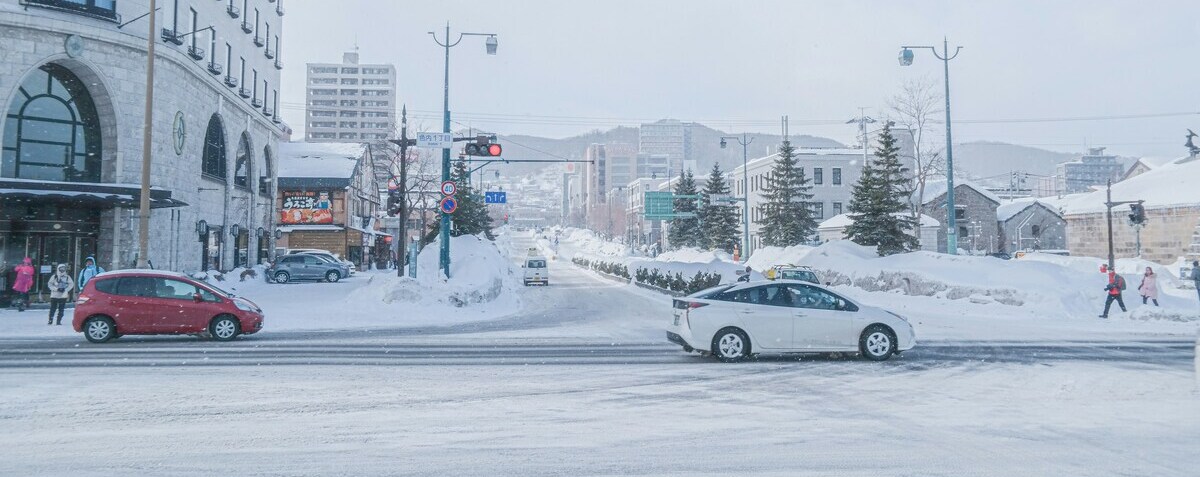
Winter does not create new hazards. It amplifies existing ones. Ice lengthens stopping distance. Snowbanks reduce sightlines. Darkness hides pedestrians in darker clothing. Fatigue and rushed schedules add pressure.
The same intersections that function acceptably in summer become unforgiving in January. This seasonal effect explains why early-year collision statistics often spike, even when traffic volumes drop.
“Statistics show intersection-related collisions increase in the new year, largely due to winter driving and low light conditions.”
— Alberta Government Traffic Safety Tips, January 2025
Practical Safety Tips for Everyday Intersections
| FOR DRIVERS → Reduce speed well before the intersection → Maintain enough distance to see the wheels of the vehicle ahead → Scan crosswalks and sidewalks, especially when turning → At a four-way stop, yield to the vehicle on your right → Use your signal when making turns | FOR PEDESTRIANS → Make eye contact with drivers before stepping into the roadway → Avoid assuming a vehicle will stop, even when you have priority → Allow extra time, particularly in winter conditions → Never jaywalk — always use crosswalks → Put away phones when crossing the street |
These steps are simple, but they align with how collisions actually occur.
Did you know?
- Most intersection collisions result only in property damage, yet the same locations often generate repeated near-misses
- Rural intersections account for a disproportionate share of fatal crashes despite lower traffic volumes
- The economic cost of collisions in Alberta’s Capital Region exceeds $800 million annually
Common myths
MYTH “If I have the right-of-way, I am safe” | REALITY Right-of-way is a legal concept, not physical protection. Always verify others see you. |
MYTH “A yellow light means go faster” | REALITY Yellow means slow down and prepare to stop accelerating is a leading cause of intersection crashes. |
Related topics on this site
- Red Light Violations
- Driving Behaviour & Safety Culture
- Real Cost of Collisions
Where this leaves us
Intersection safety is not about perfect behaviour or flawless design. It emerges from predictability. When road users understand how conflicts arise and adjust accordingly, risk drops. The goal of this site is to share that understanding clearly and calmly. We all move through these intersections every day. Paying attention to how they actually work is one of the simplest ways to reduce harm without pointing fingers.